The Basics of Supermarket Shopping Like an Italian
You arrive at Number 18, open the kitchen doors, and find everything you need to settle in: local coffee, butter, homemade sourdough, and a chilled bottle of Monferrato wine.
But once you’ve unpacked and enjoyed your first slow morning on the terrace, it’s time to stock up for the days ahead.
Grocery tourism is one of our favourite ways to travel—and in Piedmont, it’s a way of life. For us, food is at the heart of feeling connected to a location: discovering seasonal heirloom vegetables, tasting regional cheeses, and selecting produce you won't find back home.
Whether you're looking to slow down, cook a leisurely dinner on the terrace, or simply experience Monferrato like a local, exploring our nearby markets and artisan food shops is an essential part of the Nº18 experience.
We believe great holidays are built around local food—the joy of discovering bold new flavors, visiting vibrant markets, and cooking with produce you simply can’t find back home. Experiencing Monferrato like a local starts at the supermarket or market stall.
That brings us to first the golden rule of shopping like a local: Italians don’t do a big "weekly shop." They shop frequently, buying fresh, seasonal ingredients meant to be cooked and enjoyed almost immediately.
The unwritten supermarket rules (Avoid tourist errors)
I’ve been here, walking into the fresh fruit & veg isle at the entrance and being overwhelmed by the smell of the most seasonal fruit, the hustle bustle of locals selecting their choice for the days meals and committing some of the basic unwritten etiquette rules of Italian food shopping and being under the sometimes withering glare of the locals. Let’s get to it.
The Plastic Glove Rule: You’ll find near the first aisle of the fruit & veg section a small stand usually near the weighing scales where you should get a glove to select your fruit. Underneath you’ll find compostable bags for your fruit and to attach the label to after weighing.
Weighing Produce: Don't bring unweighed produce to the checkout—it’s an embarrassing wait under the glare of others waiting in line weigh for someone to come and do it for you.
Bags & Totes: Bring your own bags or be prepared to pay a few cents for biodegradable ones at checkout, you’ll find reusable bags at the entrance of Number 18 along with other handy essentials.
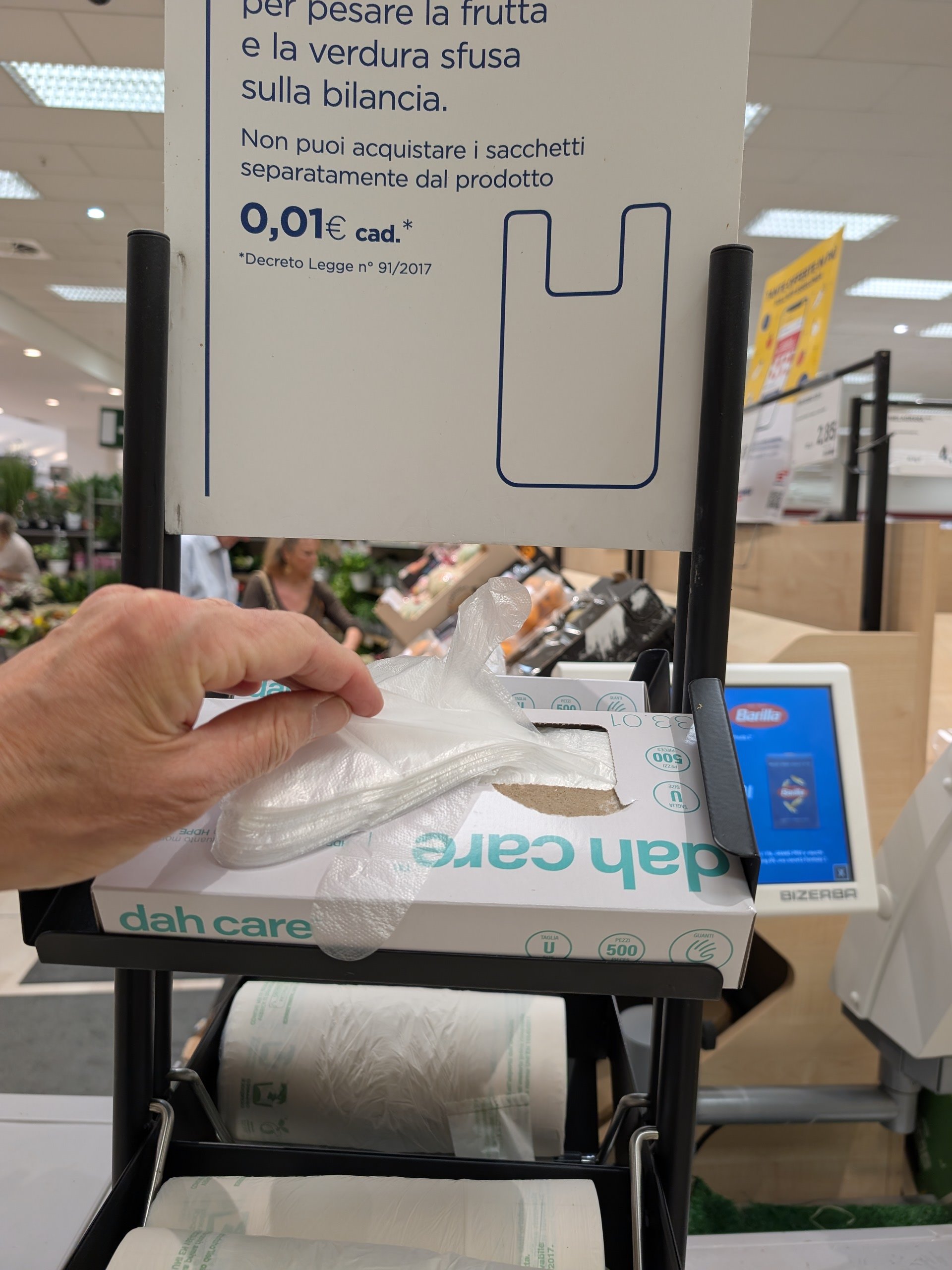
Be sure to grab a glove to select your fruit before handling them. Even for fruit where the skin is un edible it’s Italian etiquette to shop fruit and vegetables with a glove on.
The Italian pasta aisle: How to decode the wall of shapes
The pasta aisle at Esselunga on Corso Casale Asti showing the vast range and breadth of differing pasta brands & types. If you’re cooking pasta they have you covered.
Walking down the pasta aisle in an Italian supermarket can feel overwhelming—there are dozens of shapes, brands, and mysterious numbers. Here is how to pick like a pro:
The Numbers on the Box (Shapes, Not Sizes): Those numbers on the front of the packet (like Spaghetti No. 5 or Penne No. 41) aren't quality scores. They are simply internal catalog codes used by individual brands to identify specific shapes. A "No. 5" Spaghetti for Barilla might be slightly different from a "No. 5" for De Cecco—so focus on the shape description rather than the number. (But usually the lower number spaghetti means a thinner shape, a Barilla N°3 spaghetti will cook more quickly than a N°8).
Look for Bronzo (Bronze-Drawn): If you see "Trafilata al Bronzo" on the package, buy it. This means the pasta was extruded through traditional bronze dies, leaving a rough, chalky, matte surface. That rough texture acts like a sponge, allowing olive oil, ragù, or pesto to cling to the pasta rather than sliding off to the bottom of the plate.
Check the Cook Time (Tempo di Cottura): Always look for the "Cottura X min" printed near the weight or barcode. Italian pasta brands calibrate their times strictly for al dente (firm to the bite). If it says 9 minutes, set a timer for 8, test a piece, and pull it straight into your sauce pan. Please don’t throw it at the wall!
Match the Shape to the Sauce:
Long & Thin (Spaghetti, Linguine): Best for light, oil-based, or seafood sauces.
Short & Tubular (Penne, Rigatoni): Built to trap chunky meat ragùs and thick vegetable sauces.
Piedmont Special (Tajarin): Keep an eye out in the fresh egg pasta section (Pasta Fresca) for Tajarin—a ultra-thin, golden egg yolk ribbon pasta local to our region, incredible served simply with butter and fresh sage or shaved truffles.
So there you go, at least you can navigate the essential fruit & vegetable aisle with confidence and whilst you’re dreaming up the perfect pasta dish you can also select the pasta that best suits your tastes & needs. And while you’re in the big supermarket avoid the more mass market brands and choose De Cecco or Rummo for the best taste, texture and colour and if you are planning a richer sauce or filling with a more velvety texture go for fresh pasta like the Tajarin mentioned above!